Click here to get the report.
The global climate challenge is immense. Keeping global mean temperature increases to 1.5°C requires that we achieve Net Zero by 2050. Yet average annual GHG emissions during the last decade have continued to increase (IPCC AR6). At the same time, the world needs sustained growth, especially developing nations seeking to lift living standards. Viable solutions must therefore decouple economics growth from more use of natural resources. The circular economy is an important answer to that.
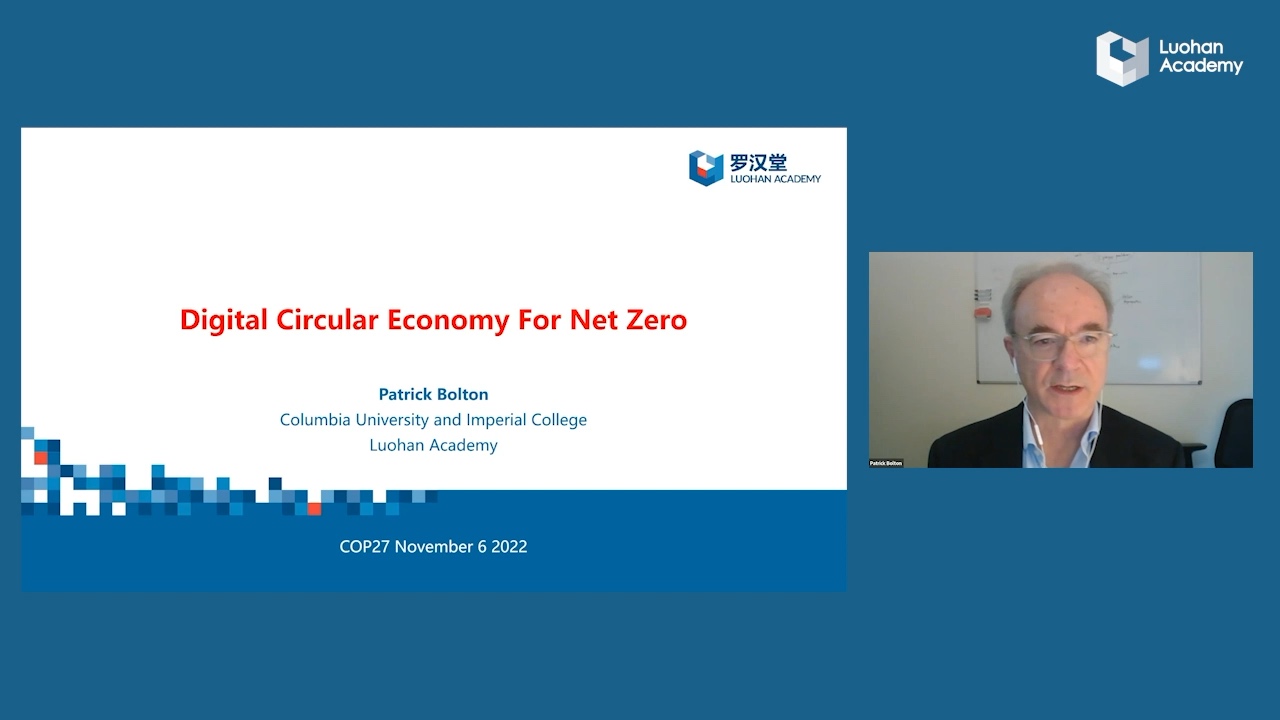
It is with this in mind that on this Earth Day 2022, Luohan Academy publish our report "Digital Circular Economy for Net Zero." The comprehensive report was a collaboration between Luohan researchers and members of our global community of scholars.
Most of the emphasis in climate policy has been on accelerating the transition away from fossil fuels energy supply, on reducing carbon emissions from production, and on decarbonizing investment and financial markets. In comparison, relatively little emphasis has been put on the consumption side. This is in part because consumers are a vast number of diverse individuals. However, as many in the Luohan community know well, digital technologies have scale and reach unmatched by previous technologies. The rapid diffusion of digital technology, the inclusive nature of this spread, the unprecedented scalability of platforms are all attributes Luohan has extensively studied.
This report begins with the analysis of two important aspects of ways to get to Net Zero: digitalization and a Circular Economy. This report argues that the key to achieving Net Zero is in promoting both digitalization and Circular Economy under a new economic system, aligned with Net Zero goals, that changes our consumption patterns to attain sustainability. This requires transforming the entire socio-economic environments -- incentives, culture, and social norms must also be transformed. We propose a concept called the "Digital Circular Economy" (DCE), a comprehensive framework to think about the system of changes to which society should move.
The report looks at five cases to show both situations when DCE can be highly effective, as well as cases when the effects are not meaningful. These include online secondary markets for goods, ride-sharing, and home sharing. Through this process, we can see that the most successful implementations of DCE require transforming socio-economic systems, paying heed to proper governance and stake-holder management, and not just focusing on individual businesses or platforms in isolation.
For Luohan Academy, the report is a critical beginning for thinking about how digitalization can enable a circular future towards Net Zero. It will be the foundation for further research and we look forward to the involvement of our community and other partners in these vital efforts.