Entering into the second year of the agentic economy, AI disruption is gearing up its pace, generating as much anxiety as excitement across the globe.
There are at least three critical questions worthy to be answered, all related to the pace of AI adoption:
The first question is about the pace of investment: is the current wave of vast AI investment hype, or is it laying a solid foundation for the AI revolution moving forward?
The second question is about the pace of application adoption: how should we assess the pace of enterprise adoption and industry transformation?
The third question is about the pace of work disruption: how is work being disrupted, and how much do we know now about the future of work and organizations?
To embrace AI is not an option but a necessity. And to do this well, it is our responsibility to search for the best answers to these burning questions.
Panel I keynote Presentations

AI Investment Boom or Bubble? Lessons from Past Technology Cycles
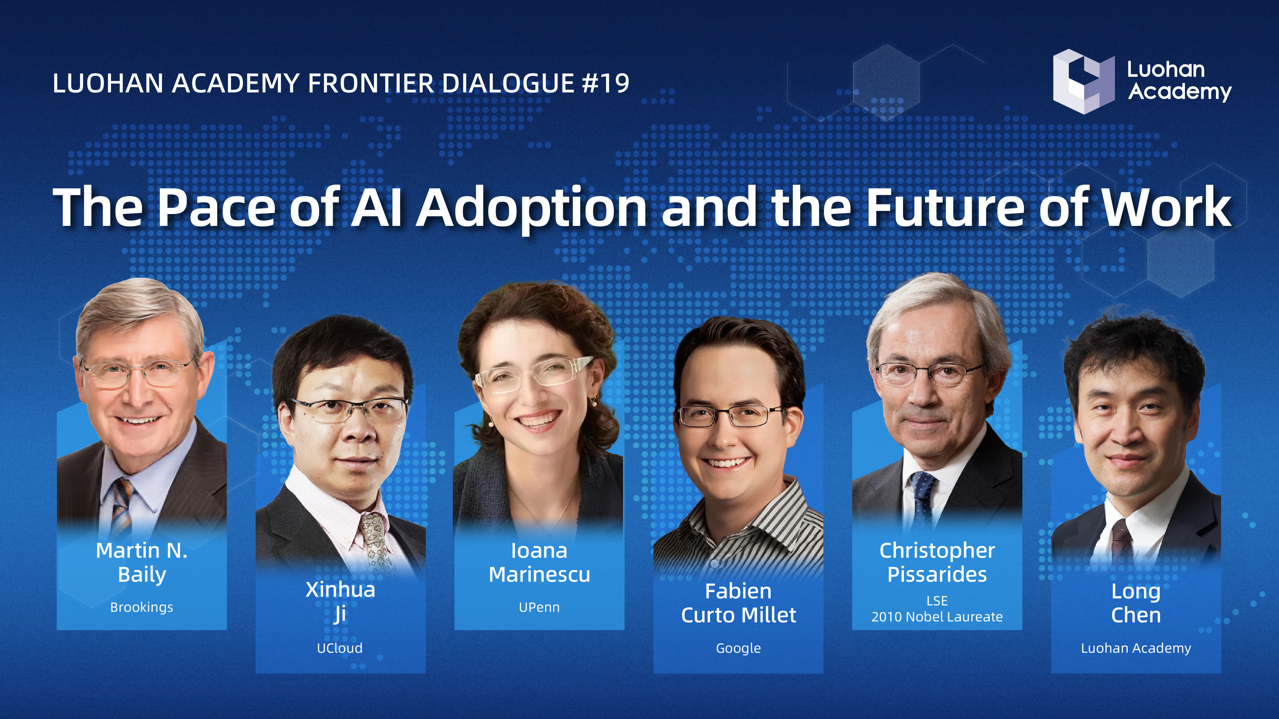
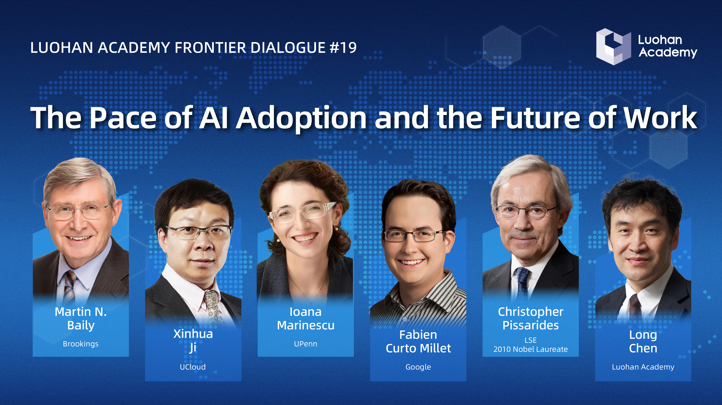
Speaker: Martin Neil Baily (Brookings)
Dr. Martin Neil Baily is a Senior Fellow Emeritus in Economic Studies at the Brookings Institution and a leading economist with decades of experience at the intersection of productivity, technological change, and macroeconomic policy. He served as Chairman of the U.S. Council of Economic Advisers under President Bill Clinton during the late-1990s technology boom. He has published extensively in leading academic journals on productivity growth, competitiveness, and the economic impact of major technological changes. Drawing on his deep expertise in historical investment cycles, he will assess whether the current wave of AI investment resembles past technological speculation and discuss its broader implications for financial stability and the economy.

An Industry Perspective: From AI Investment to Enterprise Adoption and Industrial Transformation
Speaker: Xinhua Ji (UCloud)
Xinhua Ji is Founder and CEO of UCloud Technology Co., Ltd. UCloud is among the first publicly listed public cloud companies in China and among the early Chinese cloud providers to support digital transformation in Africa through the development of local data center infrastructure. The company has built a global footprint, with operations spanning Southeast Asia, Europe, North America, South America, and Africa. Drawing on his front-line industry experience at the intersection of AI and cloud computing, he will discuss from an industry perspective, how agentic AI is being applied and embedded in the exisiting software ecosystem and which segments of value chains are most exposed to disruption, and which are more likely to be complemented by this shift?

Artificial Intelligence Saturation and the Future of Work
Speaker: Ioana Marinescu (UPenn)
Ioana Marinescu is Associate Professor at the University of Pennsylvania School of Social Policy & Practice, with secondary appointments in the Department of Economics and the Wharton Business School. She is a member of Anthropic's Economic Advisory Council and previously served as Principal Economist in the Antitrust Division of the U.S. Department of Justice. Drawing on her deep expertise in labor economics and recent work at the intersection of AI and labor, she will explore how the automation of intelligence tasks may reshape the allocation of labor across sectors, and what this implies for wage dynamics in an AI-driven economy.

How AI Will Reshape Industries and Jobs
Speaker: Fabien Curto Millet (Google)
Dr. Fabien Curto Millet is Chief Economist at Google. He is playing a leading role in developing economic insights to guide business decisions across Google, decoding the macroeconomic environment, engaging with regulators and policymakers, and pushing the frontier of thought leadership on issues at the intersection of technology and economics. An area of recent focus has been the economic impact of AI developments and their multifaceted consequences for the future of work and societies globally. He will explore how AI is diffusing across industries, how this diffusion is reshaping industrial structures, and its impact on jobs across sectors.
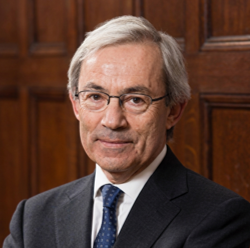
AI, Work, and Human Wellbeing
Speaker: Christopher Pissarides (LSE)
Sir Christopher Pissarides is Regius Professor of Economics at the London School of Economics and a leading authority on labor markets, economic growth, and structural change. He was awarded the 2010 Nobel Prize in Economics for his analysis of markets with search frictions, which fundamentally shaped modern understanding of unemployment and labor market dynamics. Drawing on his expertise and recent work on AI and the future of work, he will reflect on how advances in AI may reshape employment structures, worker skills, and human wellbeing.
Panel II Panel Discussion and Q&A
Speaker: All participants